


Off-Grid Microgrid for Islands and Remote Sites
PV, battery and diesel on one AC bus — 72% less diesel on our 2 MW / 4 MWh reference site.
An island or a remote mine has the same problem in different clothes: fuel arrives by boat or truck, the genset runs at a poor load factor, and the cost per kWh is set by logistics rather than by generation. The fix is not a bigger battery — it is running the diesel only when the battery and the sun cannot carry the load.
The architecture
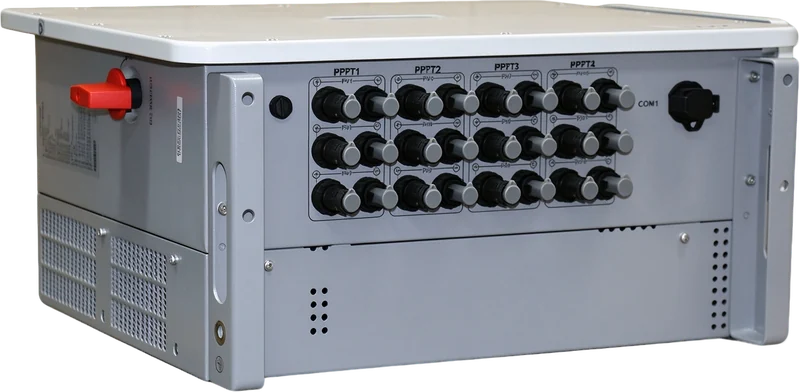
PV feeds a DC bus through MPPT modules. A bidirectional PCS couples that bus to the island AC network, and the battery sits on the same bus through DC/DC converters. The genset stays, but the EMS decides when it runs: above a state-of-charge floor the diesel is stopped entirely, and it restarts only when the battery cannot cover the evening peak or when a large load steps in.
What decides the sizing
- Night load sets the battery, not the daily energy. A site using 4 MWh a day but 2.5 MWh between sunset and sunrise needs a battery sized to the night, not the day.
- Genset minimum load sets the floor. Below roughly 40% load a diesel set fouls; the EMS therefore runs it at a working load and dumps surplus into the battery rather than idling.
- PV oversizing is cheaper than battery oversizing when the load is daytime-heavy. DC-coupled MPPT lets one array charge the battery and serve load simultaneously.
What we delivered
On a 2 MW / 4 MWh island system, the diesel share fell 72%, the levelised cost dropped from $0.42 to $0.21 per kWh, and measured availability reached 99.3%. Payback was 4.2 years at local fuel prices. The genset was not removed — it was demoted from prime power to backup, which is what made the payback defensible.
What goes on site.
| Generation | |
| PV array | Sized to daytime load plus battery recharge, DC-coupled through MPPT modules |
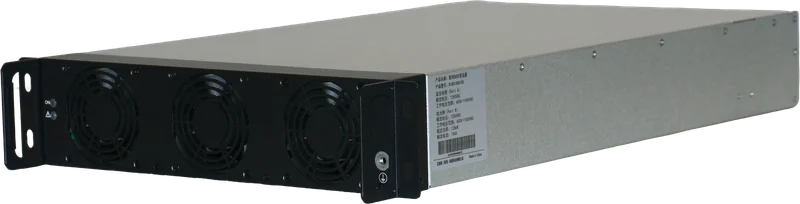
| Battery | LiFePO4 cabinets, 241–522 kWh per unit, parallel banks |
| Diesel genset | Retained as backup, absorbed into the EMS as a controllable source |
| Conversion | |
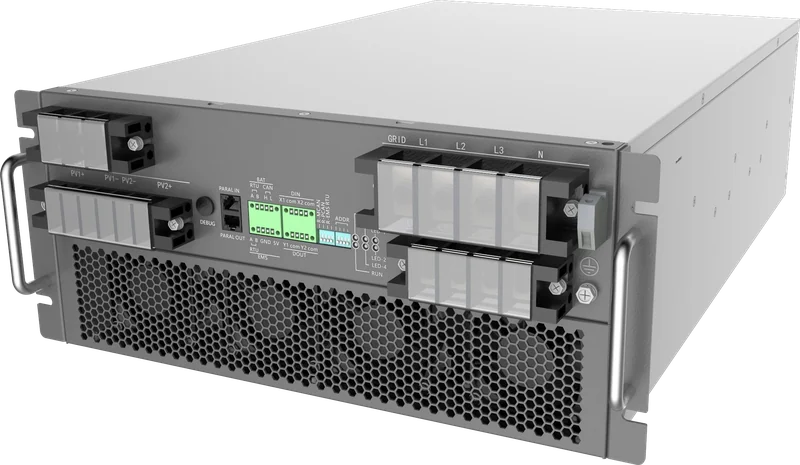
| PCS | Bidirectional, 125–500 kVA per unit, up to 3 units parallel |
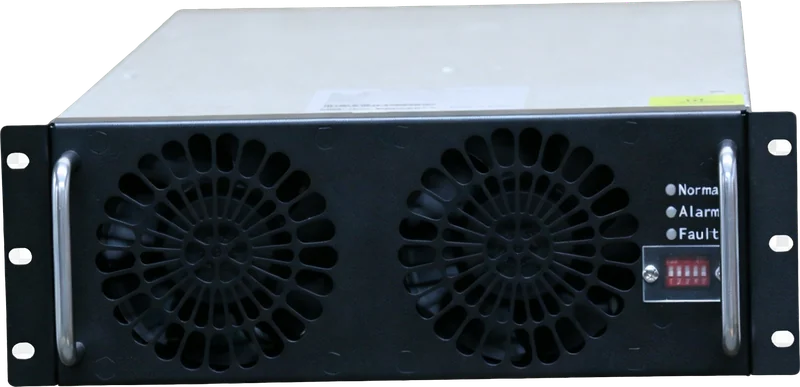
| MPPT | 60 or 120 kW modules, 1 or 4 channels each |
| Transfer | STS with 0 ms active transfer, <10 ms passive |
| Control | |
| EMS | SOC balancing, PV prioritisation, genset start/stop, load shedding |
| Monitoring | Cloud platform with remote alarm and monthly reporting |
| Reference outcome | |
| Diesel consumption | −72% against the pre-project baseline |
| Payback | 4.2 years |
| Availability | 99.3% measured uptime |
| Cost of energy | $0.42 → $0.21 per kWh |
| CO₂ avoided | ≈1,052 t per year |